
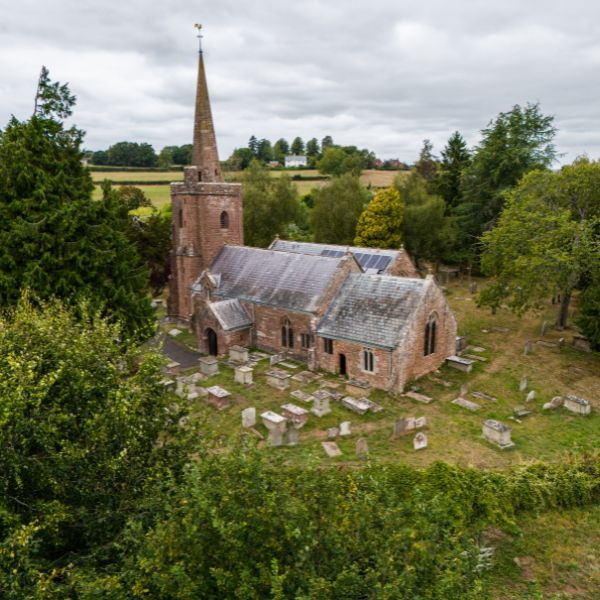
Llangarron Parish Church occupies a sacred site that can trace its history as far back as Roman times and beyond.
Its place on a sandstone promontory near to the River Garron indicates that long before Christianity came to these parts it was a site where ancient worship was practised. Indeed, this could be the reason why the Romans smelted iron ore there as a way of eradicating what they perceived to be a threat to their own culture.
The earliest known church on the site was constructed, according to a Llandaff Charter, in 745 CE using oak that was once so prevalent in the area.
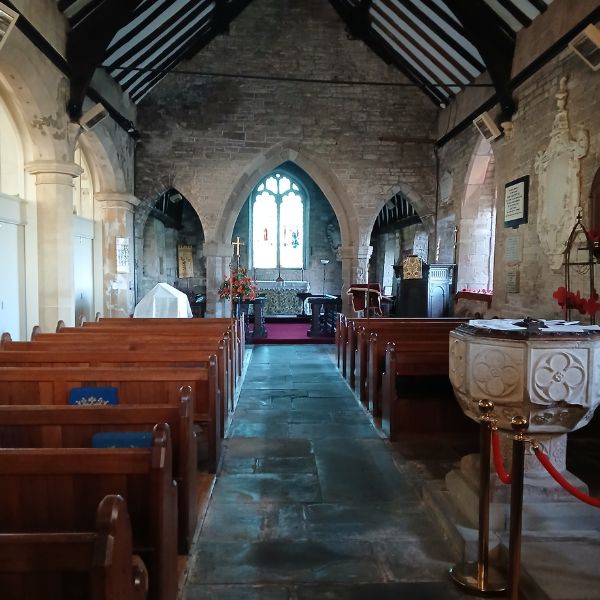
Immediately inside Llangarron Church a Romano-British stone figure overlooks the nave. This is thought to be a carving of St. Deinst, the Celtic Christian founder of the church. Born in the British kingdom of Rheged, Deinst and his family fled conflict in those parts to settle in south-west Wales.
Deinst was then sent to Llangarron to receive an education from a highly respected religious leader called Dubricius. Later in life Deinst became the first Bishop of Bangor, this status inspiring those who remembered him at Llangarron to name the church in his honour.
It is the only church in England to be named after him.
Other features making this church one of exceptional historic interest include the rare 14th century octagonal font, a 13th century coffin lid used as a nave window lintel, and a 14th century scissor-braced chancel roof.
The church is like a time capsule, its architectural features reflecting centuries of enhancement. The elaborate memorials demonstrate the importance and wealth of some past residents such as the Gwillyms of Langstone Court and the Scudamores of Treworgan.
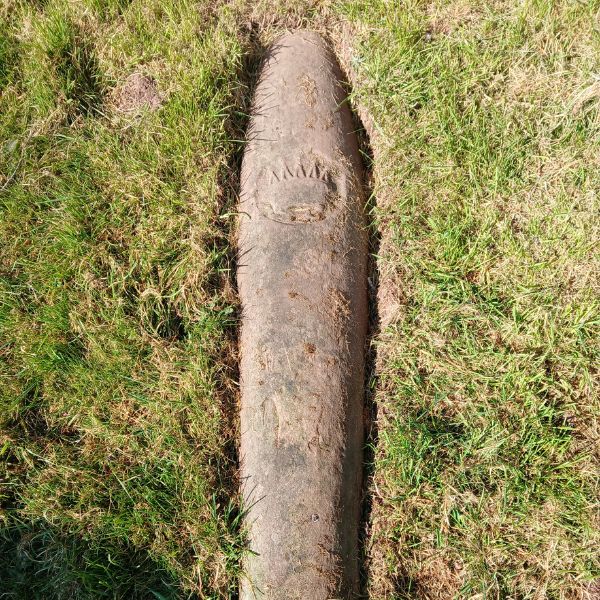
In the churchyard, located to the south-east of the church, lies a 14th century cigar-shaped memorial emblazoned with the Harris family crest, a hedgehog. There are 35 Grade II listed memorials altogether, many of these table top tombs.
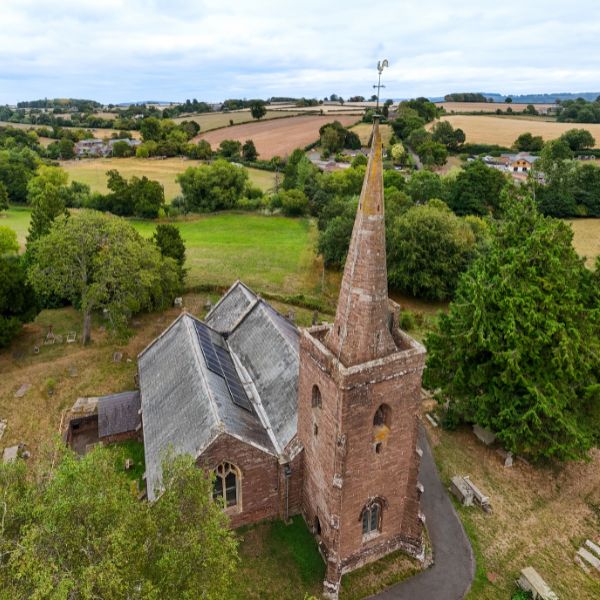
Also worth noting is the top of the mid-14th century spire that was recycled at the beginning of the 20th century into the base for a sundial, all of which stands on top of the foundations to an ancient preaching cross.
A walk around the periphery of the church building reveals several engraved carvings on the walls, a knot design on the south-east buttress dating from the 11th century.
Llangarron Church offers an exciting opportunity to explore a place of worship two millennia in the making.
Detailed guides are available within the church along with displays relating to aspects of the church’s history.
The legacy of St. Deinst is a determination to nurture nature within the churchyard in order to create a place where visitors can find peace in solitude, an opportunity to take a moment away from the business of everyday life.
Location
LLangarron
Near Ross on Wye
HR9 6NJ
What 3 Words: outwards.logs.piston
- Open 9.30am – 5pm
- Support from Big Lottery Award
- Popular with ramblers